Pitch your Startup, App or Hardware or post a Startup Event or Startup Job
Company profile:
Startup name: RDVCC
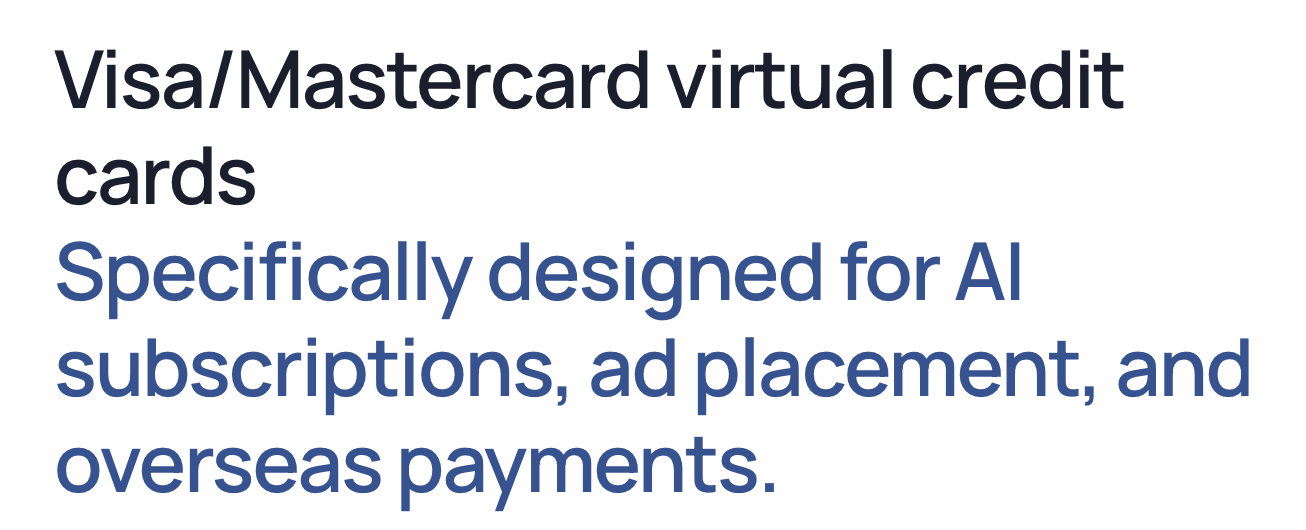
Tagline: Prepaid Visa & Mastercard virtual cards for AI subscriptions, ads and overseas SaaS
Elevator Pitch: RDVCC issues prepaid Visa/Mastercard virtual cards for AI subscriptions, ad accounts, US Apple ID and overseas SaaS. Cards from $1, 0.5% top-up, no monthly fee. 50+ BINs, Chinese & English UI.
Operator: AGGS TECHNOLOGY SERVICES CO., LIMITED (HK) — FinCEN MSB registered.
Target Market: AI subscriptions, ad accounts, US Apple ID and overseas SaaS
How will you make money?: Cards from $1 and a 0.5% top-up fee. No monthly fee.
How much capital have you raised?: null
Website: https://rdvcc.com/en
City/Country: Hong Kong
AI-assisted summary:
RDVCC is a consumer-facing virtual-card platform offering prepaid Visa, Mastercard, and US-oriented virtual cards for online payments such as AI subscriptions, advertising spend, streaming, e-commerce, and US App Store purchases. It is operated by Hong Kong-based AGGS TECHNOLOGY SERVICES CO., LIMITED, according to the company’s compliance disclosure. (Source: https://rdvcc.com/en) (Source: https://rdvcc.com/en/compliance)
The startup matters because it is addressing a practical payment-access problem: users outside the US, particularly Chinese-speaking users, can face friction when paying for overseas software, subscriptions, advertising platforms, and merchants that require specific card-network, billing-address, or authentication characteristics. RDVCC positions its cards as a prepaid alternative rather than a credit product, meaning users fund a USD balance before spending. (Source: https://rdvcc.com/en/about) (Source: https://rdvcc.com/en)
Problem and target users
RDVCC targets individuals and teams that need online payment credentials compatible with international merchants but do not have access to a suitable overseas payment card. Its stated user groups include people paying for services such as ChatGPT, Claude, cloud infrastructure and developer tools; media buyers funding Facebook, Google, and TikTok ad accounts; users creating US Apple IDs; and online shoppers who want isolated cards and spending limits for subscriptions. (Source: https://rdvcc.com/en)
The company’s positioning is especially relevant for performance-marketing teams, where multiple cards, separate spending limits, and transaction-level controls can help isolate campaign budgets and reduce operational overhead. RDVCC says its team-account tooling allows an account owner to fund cards and assign card limits to buyers. (Source: https://rdvcc.com/en)
Product and solution
RDVCC provides virtual cards across Visa and Mastercard networks, including cards marketed with US BINs and matching US billing addresses for merchants using address-verification checks. The platform says it supports more than 50 live card BIN ranges across US, Hong Kong, Singapore, and European issuing regions, although merchant acceptance remains dependent on the particular card range and merchant risk controls. (Source: https://rdvcc.com/en)
Core workflow is straightforward: users register, complete identity verification, deposit funds, issue a card, and use its number, expiry date, CVV, and billing address for online checkout. RDVCC also advertises bulk issuance, card freezing or closure, per-card limits, export functions, and support ticketing. (Source: https://rdvcc.com/en)
The service emphasizes scenario-specific card selection rather than universal acceptance. It offers separate guidance for AI-tool subscriptions, ad campaigns, streaming, cross-border e-commerce, US Apple accounts, and overseas shopping. (Source: https://rdvcc.com/en/help/supported-platforms)
Business model, pricing signals, and traction
RDVCC’s business model appears to be transaction-led rather than subscription-led. Its published fee schedule includes a 0.5% USD deposit fee, card issuance starting from $1, tiered card top-up fees ranging from 2% down to 0.5% based on monthly volume, and transaction-related charges that vary by BIN range; it says there are no monthly or annual fees. (Source: https://rdvcc.com/en/pricing)
The platform also charges a flat $2 payout fee for balance withdrawals or account-closure payouts, subject to its published conditions and minimums. Some advertiser-group users may receive 0% card top-up fees on eligible ad-focused BINs, which suggests a deliberate effort to attract higher-frequency media-buying customers. (Source: https://rdvcc.com/en/pricing)
RDVCC discloses a FinCEN MSB registration number and Hong Kong business registration number, but FinCEN states that MSB registration is not a government endorsement, certification of legitimacy, or license to operate in the United States. (Source: https://rdvcc.com/en/compliance) (Source: https://www.fincen.gov/msb-registration-web-site)
Expert take
RDVCC’s strongest early positioning is its focused workflow for cross-border digital purchases, particularly for AI subscriptions and ad operations where card compatibility and budget segregation matter more than traditional consumer-card features.
The main diligence question is maturity. The company’s public site says the RDVCC brand site launched in May 2026, so founders and operators should treat the platform as a relatively new provider, test it with small operational balances, and avoid making a critical payment workflow dependent on a single card range or provider. (Source: https://rdvcc.com/en/about)
Note: Information based on publicly available sources at the time of writing, and summarized by AI.
Pitch your Startup, App or Hardware or post a Startup Event or Startup Job
About the Author
